Vibe Coding Removed from App Store
In March 2026, Apple completely removed the Vibe Coding app, Anything, from the App Store, marking a significant setback for its survival in a closed ecosystem. This article deeply analyzes the core of this conflict—the fundamental incompatibility between Apple’s Guideline 2.5.2 and the logic of AI-generated code. As the platform insists on a static review framework, entrepreneurs are forced to make difficult choices between web-based survival and migrating to Android. This is not just a technical battle but a real challenge to the monopolistic review power of app stores.
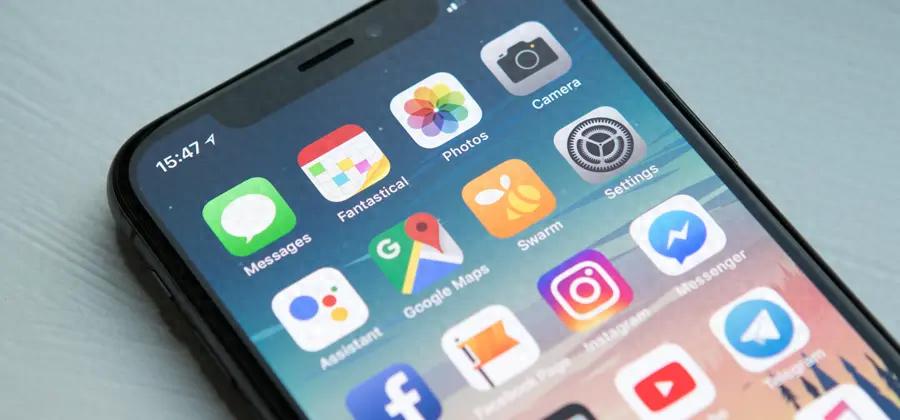
Anything’s co-founder and CEO, Dhruv Amin, stated that the app had previously helped users publish thousands of applications on the App Store, including management systems for emergency responders and reimbursement tracking tools designed for gig economy workers.
According to The Information, prior to Anything’s removal, Apple had already implemented update freezes on similar applications like Replit and Bitrig, indicating a systematic tightening of the Vibe Coding category. Apple insists that this action is merely enforcing existing rules to prevent apps from introducing new features without review; however, critics argue that this review framework, designed for static applications, cannot accommodate the underlying logic of AI-generated content.
Amin bluntly remarked, “This is the problem with Apple and closed platforms—either they made a mistake, or they decide that your category is not allowed to exist.” He is currently evaluating a shift to Android, while other teams have turned to pure web development. The future of Vibe Coding is becoming increasingly clear.
Apple Changes Course After Thousands of Apps Launched
Last August, Anything entered the market as a browser-based Vibe Coding tool. Vibe Coding allows individuals without programming experience to generate applications directly through AI—by describing their ideas, the code is automatically produced. In November, Anything launched its iPhone client, and the App Store review team raised no objections, allowing it to be released smoothly.
In the following months, Anything continued to update, and users had published thousands of applications on the App Store using this tool, including valuable products such as a management system for emergency responders and a reimbursement tracking tool for gig economy workers. The existence of these applications demonstrated that Vibe Coding is not merely a toy-level technical experiment.
The turning point occurred in mid-December. Apple’s review team began rejecting every update submitted by Anything, citing violations of Guideline 2.5.2. This was less than two months after the iPhone version launched. Amin attempted to compromise by moving the Vibe Coding preview feature from the app to a web browser to avoid controversy. Apple not only rejected this submission but also removed the entire app from the App Store in March.
From initial approval and launch to update freezes and final removal, the entire process took less than six months. Before Anything’s app was officially removed, The Information reported earlier this month that Apple had blocked updates for multiple Vibe Coding applications—shortly after, Anything faced a more comprehensive removal.
Meanwhile, Replit and Bitrig, also part of the Vibe Coding category, remain on the App Store but are similarly unable to update—Replit’s last update was in January, and Bitrig’s was in November of last year. Apple’s attitude towards this category reflects a systematic tightening.
Guideline 2.5.2: A Rule That Closes Off a Category
Apple’s sole reason for the removal was Guideline 2.5.2. The original wording of this rule states that applications must “be self-contained within their installation package,” and must not read or write data outside designated container areas, nor “download, install, or execute code that introduces or modifies application characteristics and functionalities.”
The original intent of 2.5.2 was to prevent developers from circumventing App Store reviews by silently pushing unreviewed feature changes on user devices. This logic is reasonable—applications extending permissions without review do need to be constrained in the context of mobile security. The problem arises when this rule is aimed at the Vibe Coding category, as its reach far exceeds the original design intent.
The core mechanism of Vibe Coding tools is precisely to generate and execute code dynamically at runtime via AI. Users describe their needs, the model outputs logic, and the application presents results in real-time. This process naturally falls within the prohibitions of 2.5.2—because each generation effectively pushes “unreviewed new features” to the device. In other words, as long as Vibe Coding remains Vibe Coding, it cannot operate on iPhones without violating this rule.
Apple’s statement is that the company is not targeting the Vibe Coding category but is merely enforcing existing rules to prevent applications from undergoing substantial changes without review. While this explanation is flawless in wording, it sidesteps a critical question: why apply a rule designed for static applications to AI tools that generate dynamic content?
Anything attempted a compromise path: moving the code preview feature to a web browser to display AI-generated content without executing it directly within the native app. The logic behind this solution is that the browser itself is a sandbox environment, circumventing 2.5.2’s restrictions on local code execution. Apple rejected this submission and subsequently removed the entire app. This means Apple is not only enforcing rules but also narrowing the possible exceptions.
For other developers, the current enforcement of this rule creates a highly uncertain situation. Apps like Replit and Bitrig remain on the App Store but cannot update; some teams, like Vibecode, have proactively abandoned iPhone development in favor of pure web development. The same rule produces vastly different enforcement outcomes, and Apple has yet to provide clear boundary explanations.
The Cost of a Closed Platform: How Entrepreneurs Coexist with Apple
After Anything was removed, Dhruv Amin made a poignant statement: “This is the problem with Apple and closed platforms—either they made a mistake, or they decide that your category is not allowed to exist.” This statement highlights a structural dilemma that entrepreneurs face in platform ecosystems, which is often overlooked.
In the mobile internet era, the App Store is the only legal channel to reach iPhone users. For consumer-facing applications, losing this entry point is almost equivalent to losing the entire market. Before being removed, Anything had already accumulated thousands of user-published applications through this channel, establishing a real product ecosystem. The visibility of these assets to iOS users was completely lost at the moment of removal.
The unpredictability of the timeline is even more challenging. Anything’s iPhone version was formally approved by the App Store review team at launch, and after months of operation, it faced a blockade. Approval does not guarantee long-term compliance; the interpretation of platform rules always lies in Apple’s hands and can be redefined at any time. For early-stage startups, this uncertainty is nearly impossible to hedge through any conventional business planning.
Faced with this situation, entrepreneurs have limited options. Amin is currently evaluating whether to shift focus to the Android platform, which means rebuilding the product on a new tech stack while bearing the friction costs of user migration. Another path is to completely transition to the web, bypassing all native app store controls—Vibecode has already made this choice, abandoning iPhone development. Both paths mean sacrificing the established iOS user base, with real costs involved.
From a broader perspective, Apple’s handling of the Vibe Coding category reveals issues of compatibility between platform rules and emerging technologies. The existing App Store review framework is designed for static, fixed-function native applications. As AI blurs the boundaries of applications, the original review logic begins to fail—but the costs of this failure are borne by developers.
Apple itself has its own interests to consider. Xcode has recently integrated Anthropic’s Claude and OpenAI’s Codex, launching AI programming assistance features aimed at professional developers. The core value proposition of Vibe Coding tools is precisely to allow non-professional users to build applications directly, bypassing professional tools like Xcode. This competitive relationship makes it difficult to interpret Apple’s attitude towards this category as a neutral rule enforcement.
The Future of Vibe Coding Is Not in the App Store
Amin’s judgment is worth highlighting: “The scale of Vibe Coding will far exceed Apple’s current imagination.”
The essence of Vibe Coding is to lower the barriers to software production. When someone without any programming background can describe their needs in natural language and receive a runnable application, software development transforms from a specialized skill into a tool accessible to ordinary people.
This shift in magnitude is akin to how spreadsheets democratized financial modeling and no-code tools democratized website building; it represents a paradigm shift of the same scale. The App Store’s blockade cannot change this direction; it can only affect where it lands.
Currently, the direction of landing is becoming increasingly clear: the web. Vibecode’s choice is representative—abandoning the iPhone native side and focusing on the browser-based product experience. This path bypasses the App Store’s review controls, at the cost of sacrificing some native experience and distribution benefits. However, for tools like Vibe Coding, the core value lies in the generation capability itself, rather than platform nativeity—the web is sufficient to carry this value.
From a distribution logic perspective, a web-first strategy is actually more flexible in the current environment. Users can access directly through links without going through any app store review nodes, and the speed of product iteration is not constrained by third-party approval cycles. This is precisely the rhythm needed for AI-native products—models are evolving rapidly, and products must update in sync; any review friction could lead to competitive delays.
Regulatory variables are also worth noting. Apple’s systematic blockade of emerging AI tool categories has already attracted the attention of antitrust observers. In the context of ongoing scrutiny of large platform behaviors by regulatory agencies in Europe and the US, whether Apple’s actions constitute improper exclusion of competitive development tools is a question that remains undetermined but is under discussion. If regulatory pressure ultimately forces Apple to allow sideloading or relax review standards, there may still be an opportunity window for Vibe Coding tools to return to iOS.
However, until that day arrives, the main battleground for this category has quietly shifted. Anything is evaluating Android, while other teams are betting on the web, and the entire industry’s focus is moving away from the App Store as a single entry point. Apple’s blockade has, to some extent, accelerated the diversification of the Vibe Coding ecosystem—this is likely not the outcome Apple intended.
Comments
Discussion is powered by Giscus (GitHub Discussions). Add
repo,repoID,category, andcategoryIDunder[params.comments.giscus]inhugo.tomlusing the values from the Giscus setup tool.